
What Do We Really Want Out of Life?
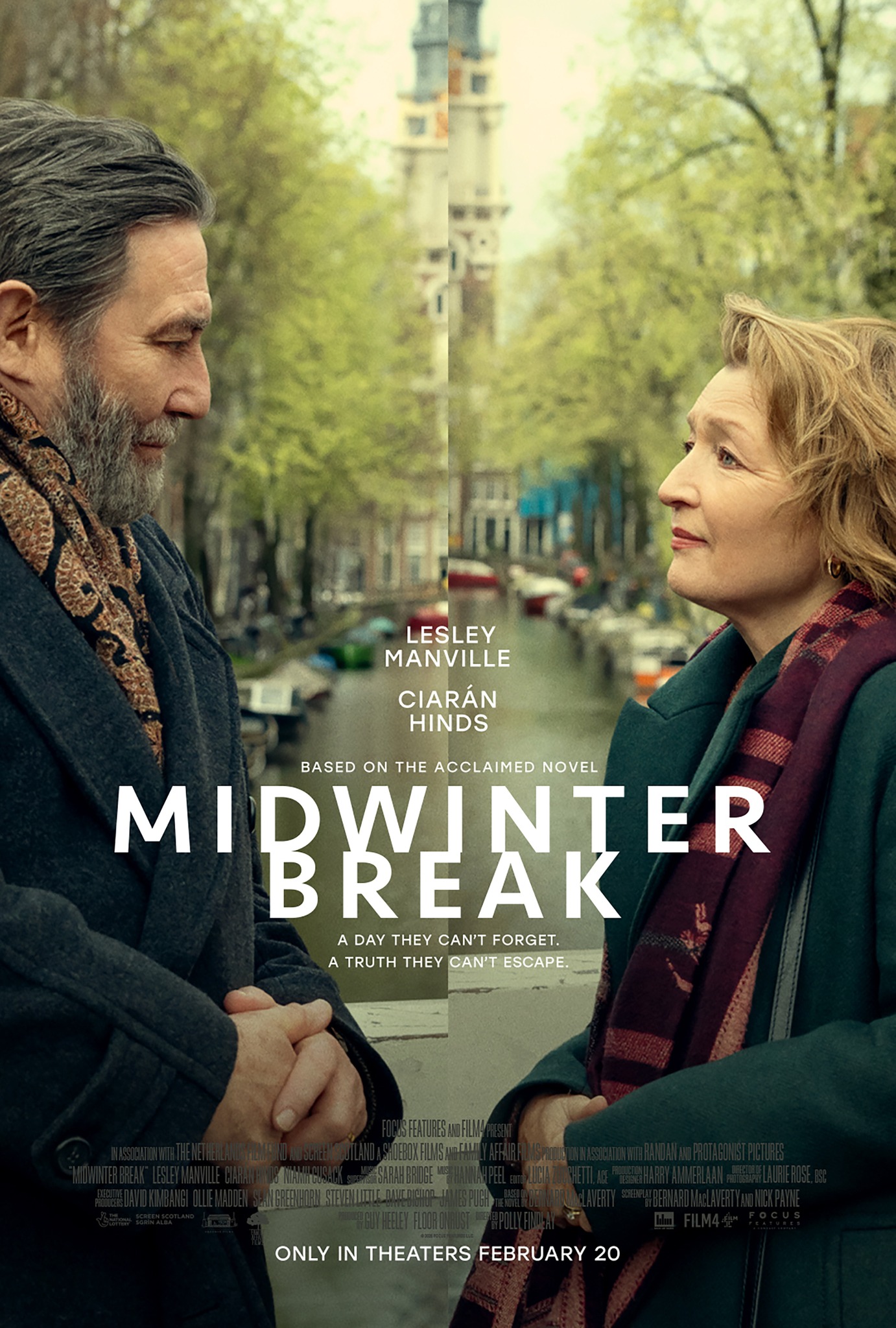
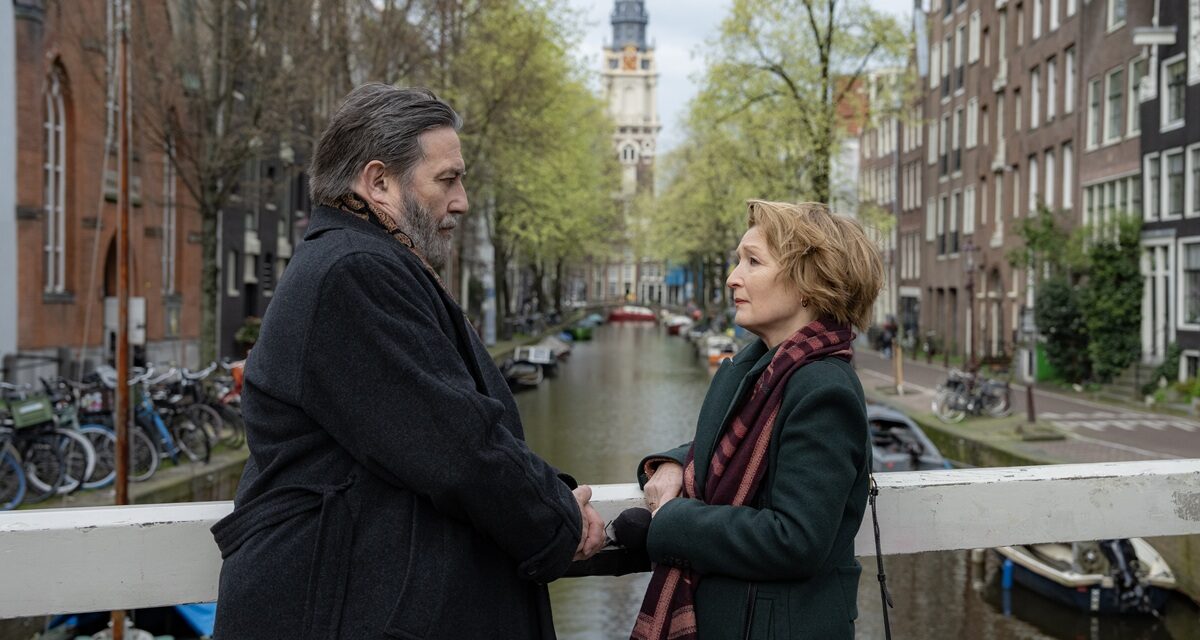
Has anyone noticed how it’s becoming increasingly rare these days to find movies that present stories with insightful, contemplative narratives? Granted, pictures like this may not appeal to everyone (especially producers salivating over the hopes of big box office numbers), but the considerations these releases address ultimately account for significant and meaningful aspects of our lives and the nature of existence, big issues that aren’t – and shouldn’t be – easily dismissed. That’s especially true now, given the hunger that many of us have for offerings that provide profound food for thought on both practical and existential levels. Fortunately, though, there’s one new release that amply helps to fill this void, the spiritually oriented relationship drama, “Midwinter Break” (web site, trailer).
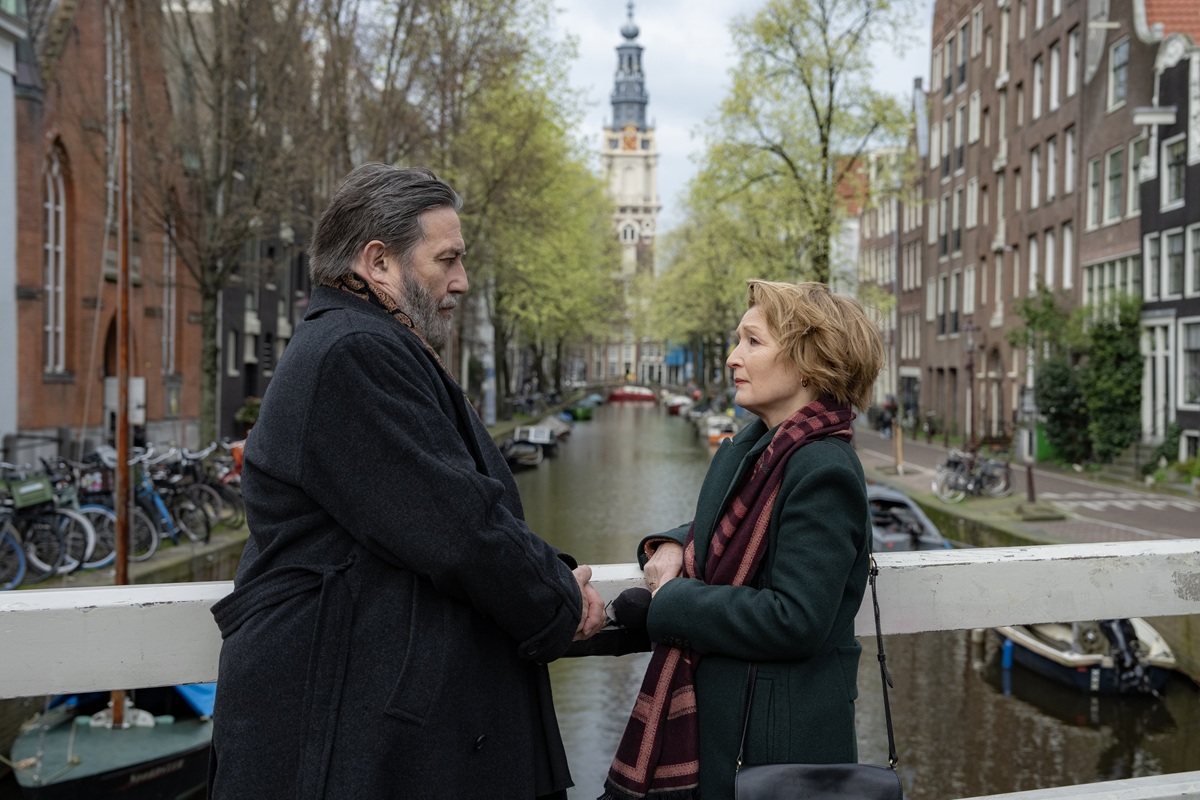
Based on the acclaimed 2017 novel of the same name by author Bernard MacLaverty, the film tells the bittersweet story of Stella (Lesley Manville) and Gerry (Ciarán Hinds), a long-married couple from Glasgow, Scotland who fled their home in Belfast, Northern Ireland years ago when the religion-driven havoc caused by “the Troubles” upended their lives. The impact of that tumultuous upheaval took quite a toll on their younger selves, coming at a time when a youthful Stella (Julie Lamberton) was pregnant and young Gerry (Ed Sayer) saw his promising career as an architect go up in flames, both literally and figuratively. And so, after several harrowing incidents, the danger got to be too much for them, prompting them to relocate to the safety and security of their new adopted home.
Glasgow provided the couple with a safe haven out of harm’s way and a good place to raise a family. But, over time, Stella and Gerry began falling prey to insidious new threats – stagnation and a growing distance between them, conditions that have steadily worsened through the years, especially now that they’ve reached the empty nest stage of their lives. And, even though they genuinely appear to still be in love with one another, there’s not much else sustaining their increasingly tenuous connection.
These circumstances have become a source of considerable concern for Stella, who craves a greater sense of meaning and fulfillment out of life, especially now that she’s getting older. That’s particularly true in matters of spirituality. As a devout Catholic who grew up and spent much of her adult life living in largely Protestant enclaves, she’s come to believe that something eminently deeper is noticeably missing from her life, something that may have been long withheld and that she wants to discover and understand while she still has the chance to do so. What’s more, she’s frustrated that this is a yearning Gerry doesn’t share with her, making her feel even more alone and isolated, especially now during the height of the Christmas holidays. Nevertheless, despite these conditions, Stella feels compelled to find the missing piece of the puzzle, even if that means having to do so on her own.
Gerry, meanwhile, is rather oblivious to what’s going on with his wife. Because she hasn’t said anything to him about her concerns, he essentially assumes all is well. For his part, he’s generally content to comfort himself with life’s simple pleasures – long naps, reading, good music, and, perhaps most notably, the contents of the nearest whiskey bottle. But, even if these creature comforts are enough for Gerry, they don’t suffice for Stella, who continues to slip further and further into a deepening state of melancholy, desperation and ennui.
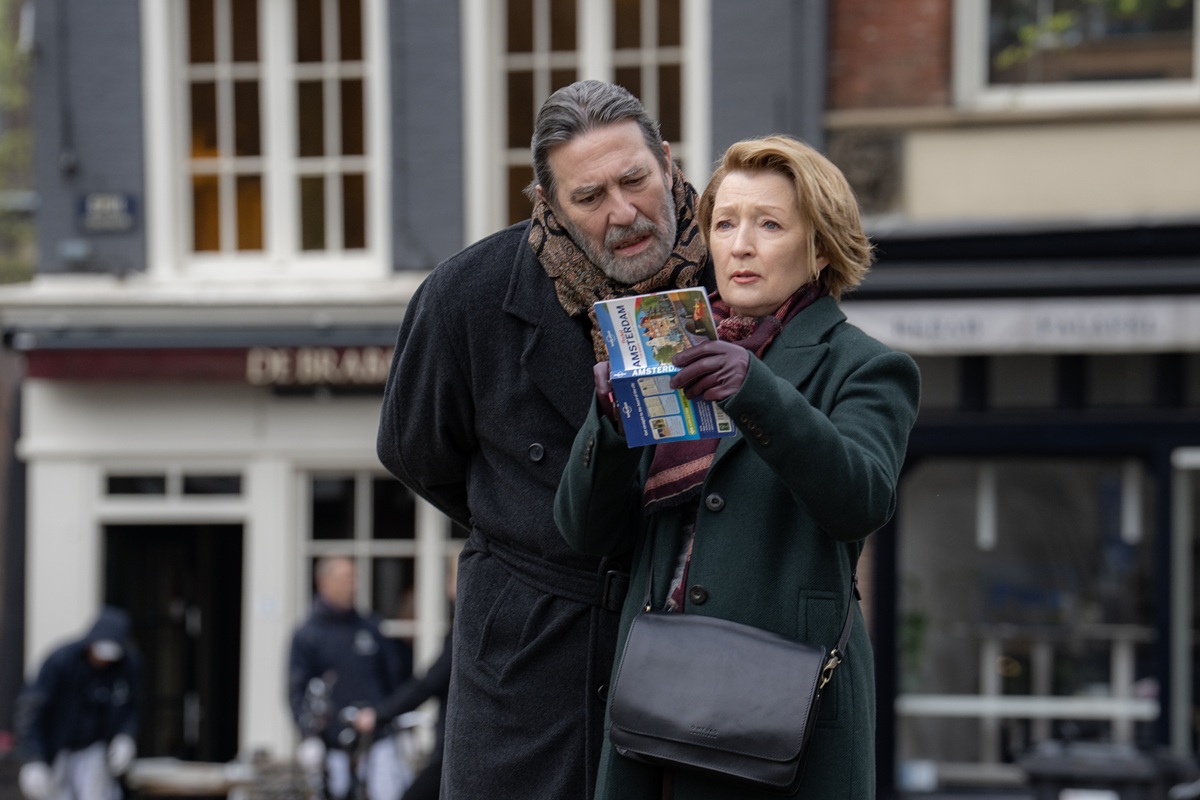
Despite the growing pressures brought on by these secular and spiritual challenges, though, Stella isn’t ready to throw in the towel just yet. So, to try and inject some much-needed vitality into her life and marriage, she spontaneously decides to surprise Gerry with a special Christmas gift – a trip to Amsterdam, a journey that she hopes will provide a chance for “an adventure” to help rejuvenate their sagging relationship. Gerry is thrilled by Stella’s generosity and thoughtfulness, and he eagerly looks forward to the trip. And Stella, in turn, is pleased that her gesture has made him happy. But little do they know that they’re about to embark on a journey that carries the potential to profoundly change their lives – and in decidedly unanticipated ways.
Upon their arrival in the Netherlands, it soon becomes apparent that Stella has made this trip for reasons other than a romantic getaway with her husband. In fact, it quickly and unexpectedly takes on the qualities of an impromptu pilgrimage, a spiritual odyssey of sorts that gives her a chance to address those unanswered questions that have so persistently been lingering in her mind.
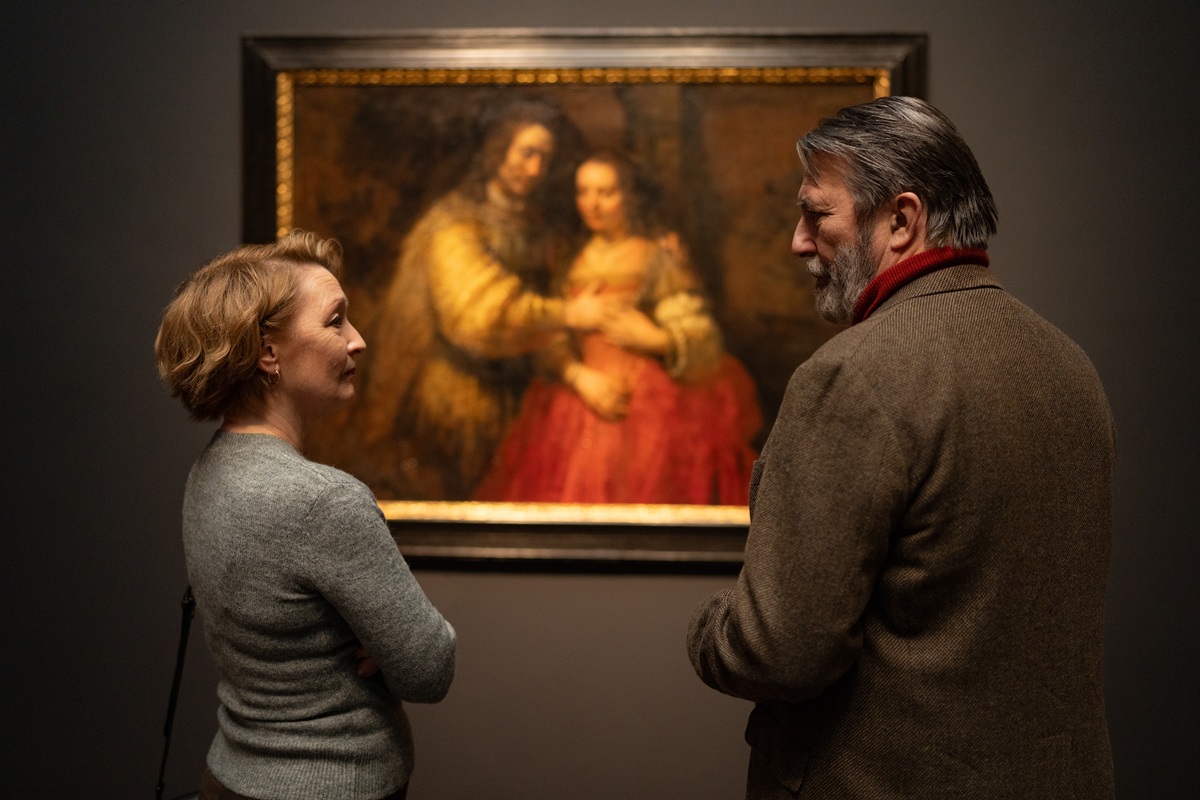
In essence, Stella experiences an emerging awakening prompted by visits to two popular tourist destinations imbued with pronounced spiritual attributes. One is the Begijnhof, a centuries-old residential complex that served as a sanctuary for Catholic women in the Middle Ages where they could clandestinely practice their faith at a time when the Netherlands came under strict Calvinist rule, a place whose history symbolically mirrors Stella’s own past and holds considerable appeal for her as a spiritual seeker. Comparably profound stirrings surface a second time when Stella visits the Anne Frank House, the home where the famed Jewish diarist was hidden to escape capture by the Nazis during World War II. Both experiences leave Stella irrevocably changed.
Gerry, by contrast, has a very different reaction to visiting these sites. While he finds them modestly thought-provoking, they don’t leave the deep impact on him that they have on his wife, a reaction that Stella finds, for lack of a better term, offensive. She’s troubled that his underwhelmed responses are more evidence of his disinterest – if not his outright disdain – for matters of a spiritual nature. And it’s yet another indication of the widening gap that’s developing between her and her husband.
This schism subsequently prompts Stella and Gerry to each go off on their own to explore Amsterdam. Stella makes a return visit to the Begijnhof, a place to which she feels strongly drawn and where she engages in a deep conversation with one of the current residents, Kathy (Niamh Cusack), a kindred spirit whom she briefly met on her first visit to the site. It provides Stella with an opportunity to open up and express herself, almost as if she were unburdening herself in a confessional to a willing listener.
In the meantime, Gerry has a very different experience, quietly exploring Amsterdam’s shops and pubs. But, despite the differences in the venues he peruses, his visits to these locales provide him with an opportunity to sort out his feelings as well. And, while the way these feelings express themselves may be simple and more subdued than what Stella experiences, that doesn’t make his introspective time any less personal, meaningful and revelatory.
But how do Stella and Gerry ultimately each come away from their respective urban adventures? Are they closer to one another, or are they more distant than ever? Or, as unlikely as it might seem, could it be a little of both? And what will it mean for them as the end of their getaway approaches? Is this the end of their journey together, both literally and metaphorically? Or is it the turn of a page, the start of a new chapter, one with new understandings and appreciation of one another?
In essence, what ultimately happens with Stella and Gerry comes down to what they believe, a notion that carries tremendous implications not only for them, but also for all of us. That’s because of the role our beliefs play in shaping the nature of our existence, the philosophy that makes such outcomes possible. It’s unclear whether either of this story’s protagonists have heard of this school of thought, but, based on how their lives are unfolding, it would appear that this knowledge would greatly help them in bringing about the kind of clarity they each want in their reality. The question, of course, is, will they avail themselves of the opportunity? To a great extent, that depends on how receptive they are to it and how they employ it if they choose to do so. And that’s important considering how much is riding on what they decide to do.
This way of thinking is especially crucial in matters of metaphysics and spirituality, for beliefs in these areas provide the fundamental underpinnings for everything that emerges out of them, from both theoretical and tangible standpoints. Given her mindset, this could (and should) be of tremendous importance to Stella, since she’s the one who’s most concerned about creating a more meaningful and fulfilling life. In fact, if there’s one spiritual truth from which she could most benefit, it would be an understanding and familiarity with this principle. But grasping that idea is clearly proving challenging considering her long-established overriding spiritual outlook.
Having lived a life as a devout religious soul, she has come to believe that the power to drive the results she seeks resides outside of herself, something that rests in purely divine hands. And while the divine spirit certainly plays a part in this process, part of it also depends on us and the intents that we put forward. Stella has definite ideas in mind for what she’s looking for, but she’s convinced that bringing them to fruition is outside her purview, that such outcomes are purely the result of divine intervention and not of a collaboratively creative process. As a consequence, she continually waits for the clouds to part for the truth to be revealed to her, unaware that she can help to facilitate that process by believing she can join in aiding the parting of those clouds. After all, this is her life that we’re talking about, not a scene out of a Cecil B. DeMille movie.
By contrast, Gerry appears to have at least an inkling of this notion, and he’s made use of it in largely practical ways to create a comfortable everyday life for himself. His wants may not be as grand as what Stella is seeking, but that doesn’t mean his results are inherently any less satisfying or meaningful. And isn’t that something most of us innately want in the end? When he learns of Stella’s lofty spiritual ambitions, Gerry tries to share his more modest insights with her, hoping that she’ll grasp them and employ them in formulating beliefs that will lead her to the attainment of sought-after fulfilling outcomes. But can she truly understand and appreciate his more down-to-earth, arguably more “mundane” approach to such matters?
Ironically, at one point during an impromptu moment of spiritual clarity while discussing the nature of miracles, Stella shares an observation with Gerry in which she maintains that these outcomes appear in all forms great and small. This is an indication that she might be on the path to understanding the foregoing notion that Gerry has been trying to impart to her ‒ and what it can do to help her achieve what she’s looking for ‒ provided she’s willing to take the advice afforded by her own insight. However, as long as she firmly holds on to the grander beliefs that she’s earnestly embraced for so many years, it’s unlikely that she’ll be able to avail herself of this simpler yet potentially more effective truth. Her own tunnel vision regarding this concept truly represents a classic case of not being able to see the forest for the trees. And that’s unfortunate, given that she may well be unwittingly cutting herself off from an abundance of genuine happiness simply by holding on to erroneously inflated notions that are fundamentally getting in her own way.
Given that we reside in a physical form of existence, the tangibility of everyday life is just as crucial to our ultimate enjoyment of it as our understanding of the supposedly loftier intangible concepts underlying it. And, in this regard, the beliefs associated with our avowed hopes and expectations about it (and how they come about) play a central role in their materialization. Do we believe that our happiness and well-being are tied to witnessing phenomena like burning bush moments, or can we find genuine contentment and fulfillment in those quiet moments of self-directed solitude and simple pleasures? Stella seems to be looking for the former, while Gerry has embraced the latter. He seems satisfied with what he’s drawn into his life, while Stella remains caught up in the incessant pursuit of something more elusive, leading to ongoing frustration – and even disillusionment ‒ when results evade her and revelations emerge that burst her bubbles.
In the end, if we’re to truly enjoy this experience we call existence, it’s imperative that we recognize that everything about it is fundamentally divine in nature and that the ways in which we employ our beliefs and focus to explore that reality ultimately determine what we get out of it, no matter how simple or complex our expectations might be. While Stella may find fulfillment by chasing spirits of an intangible nature, Gerry is just as content to look for them in liquid form at the bottom of a whiskey bottle, yet both of their respective pursuits are equally valid in their own right, no matter how much some of us might believe otherwise. The key question here, of course, is, are we getting out of these experiences what we hope to? If we’re clear about this fundamental underlying objective, we just might attain a greater sense of happiness and joy from this experience than spending our time tracking down enigmatic phantoms that forever remain beyond our grasp – and that detract from what we might otherwise realize. Given that, then, we should all be prepared to ask ourselves, are our hopes and wishes being fulfilled, and do they live up to our expectations? We can only hope the answer is yes.
The journey depicted in this story operates on both literal and metaphorical levels. The couple’s trip gives them pause to evaluate what they want out of life both individually and collectively in terms of evaluating what may lie ahead for them. It also enables them to ask deep questions about the nature and quality of their partnership, reconciling feelings about ghosts from their past, examining personal lifestyle choices, and taking stock of “big picture” perspectives on life and their respective places in the Universe. In turn, this inadvertent soul-searching exercise unearths some surprising revelations, especially when it comes to long-cherished notions about their individual belief systems. Indeed, who would have thought that a simple long weekend getaway could raise so many issues with such pervasively profound implications? Nevertheless, such are the circumstances that the protagonists find themselves in, leaving them to wonder whether they’ll be able to withstand their challenges and stay together or find themselves irrevocably changed and on new paths of self-discovery.
To these ends, director Polly Findlay’s latest offering, currently playing theatrically, truly delivers when it comes to the aforementioned contemplative narrative, providing viewers with much to think about. In doing so, “Midwinter Break” employs a deftly constructed storytelling approach in addressing its core questions, one that’s layered, nuanced and eminently thoughtful on many levels. However, it’s also the kind of picture that requires close, careful, engaged viewing; without that, audience members – like the protagonists themselves – might easily miss out on the key points the picture seeks to impart. These insights emerge through the film’s carefully crafted writing and the superb performances of the two leads, both of whom are clearly at the top of their game here. It’s also a gorgeous cinematic showcase for the picturesque city that serves as the story’s backdrop but without turning into a veiled travelogue. Admittedly, there are some pacing issues early on and some occasionally awkward sequences that come across as overly “mechanical” (again at the outset) as the film seeks to find a firm footing for itself. But one could argue that these shortcomings are reflective of the puzzling and unanticipated introspective process into which the principals are about to enter. Still, those looking to be fed by this release’s ample, meaningful subject matter will likely find themselves nicely satisfied by film’s end. This offering makes for perfect midwinter viewing, a picture that has come along at just the right time to nicely facilitate our own much-needed, restorative midwinter breaks, regardless of whether we’re talking in literal or metaphorical terms. And who knows what we might take away from the experience? It could prove life-changing – or not – depending on what we each need to get out of it ‒ much like life itself.
A complete review is available by clicking here.
Who Will Win the 2026 Oscars?

It’s that time of year again – time for my predictions of the winners at the upcoming annual Academy Awards. Check out my picks for eight Oscar categories – best picture, actor, actress, director, supporting actor, supporting actress, international film and this year’s newest category, casting (i.e., best ensemble cast) – available by clicking here, And be sure to check out my Oscar scorecard after the fact. Wish me luck!
Looking Back at the Documentaries of 2025

With 2025 now in the books, it’s time to look back on the year in movies. In this third of three blogs, I spotlight my Best and Worst Documentaries of 2025, beginning with a Top 10 Countdown, followed by an open-ended list of Honorable Mentions and an abbreviated list of my choices for the Worst Documentaries of the year. As much as possible, I’ve included web site and trailer links, as well as links to my own reviews. In separate previously published blog posts, I examined my Best Films of 2025 and my Worst Films of 2025.
The year just passed was a good one for documentaries (certainly better than the past few were). In particular, there was greater diversity in 2025’s selections, a welcome change, to be sure. But, as I have said with regard to other such trends in movies, I believe there’s always room for more.
Some readers have asked me why I write about documentaries separately from narrative features when compiling my best and worst lists. The answer is simple: narrative features are fictional, while documentaries are not (or at least they’re not supposed to be, though there are two releases in this blog where that distinction is not as clear-cut as it probably could be). Lumping both types of films together, in my view, is fundamentally an apples-to-oranges comparison, one that can’t be easily made when it comes to assessing cinematic attributes, traits that I believe are thus best evaluated separately.
So, with all that said, check out what I thought about 2025’s crop of documentaries, available by clicking here. You may not agree with me, and I respect your opinions, regardless of whether our views align. I hope you’ll respectfully grant me the same. And your feedback, as always, is welcome!
A Profile in Courage
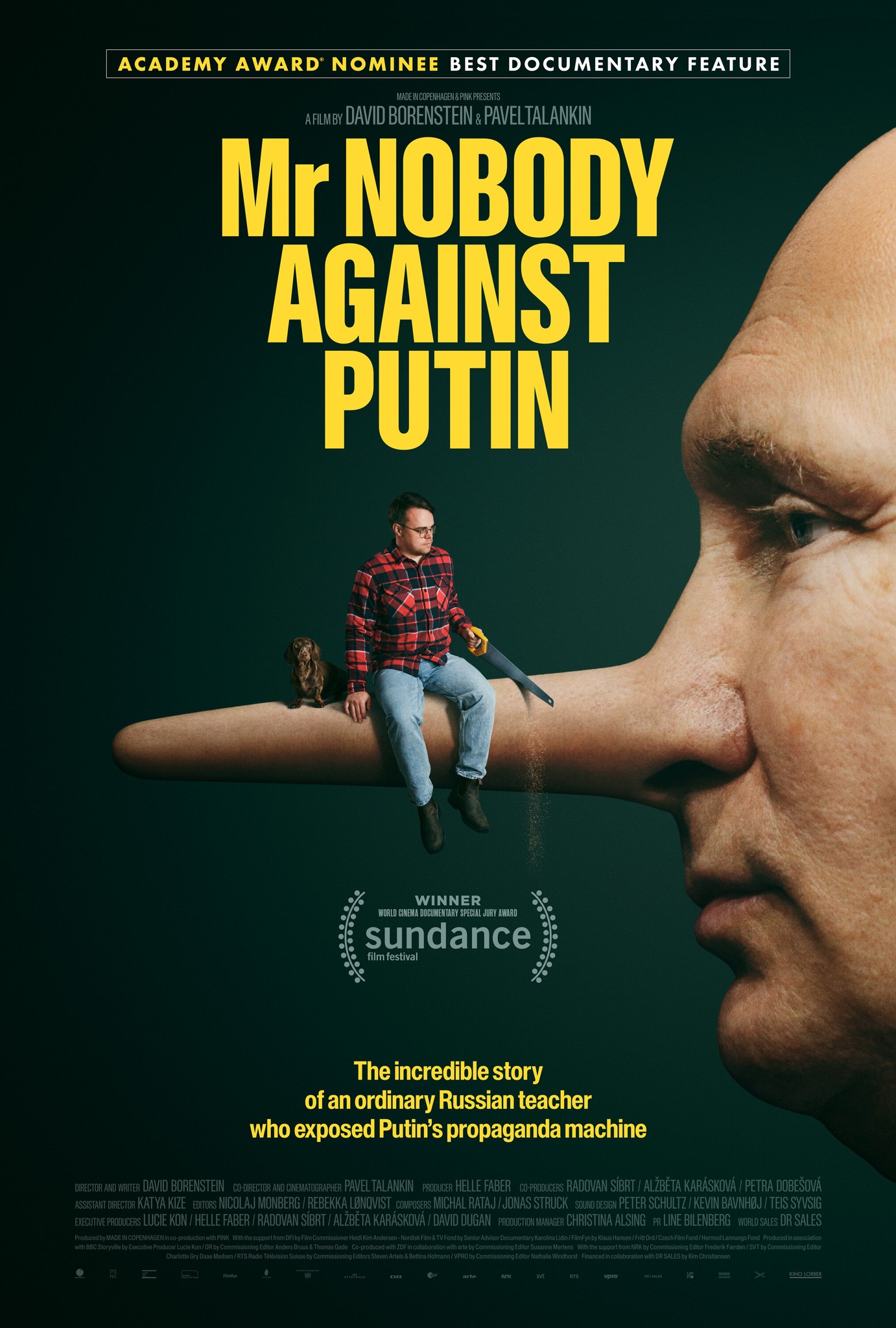
Courage comes in many forms, some of them plainly apparent and others seemingly unlikely. Ironically, it’s those emboldened but unsuspecting heroes who often end up achieving the greatest victories in their endeavors, even when up against formidable opponents. And now the makings of such an implausible scenario provide the focus for an insightful first-person documentary, one in which an unassuming, mild-mannered David matter-of-factly takes on a daunting Goliath and does so with an unintimidated sense of aplomb and wry tongue-in-cheek humor, a story chronicled in the new delightful but troubling release, “Mr. Nobody Against Putin” (web site, trailer).
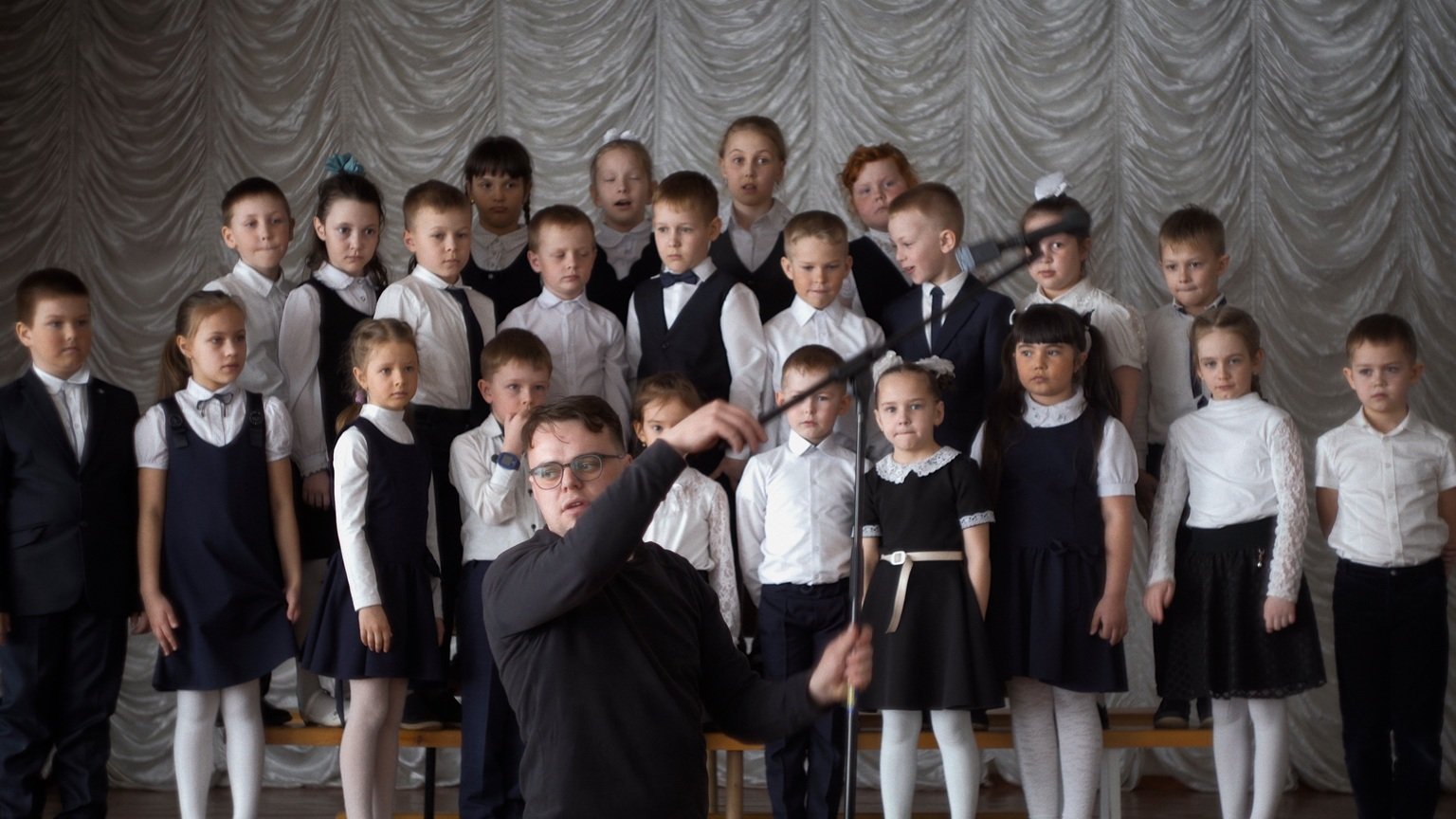
In the small Ural Mountains community of Karabash, Pavel Talankin (better known as “Pasha”) has lived a quiet life as the special event organizer and videographer of a local grade school. Over the years, he has capably and methodically gone about his everyday duties, such as recording school choir performances and arranging graduation ceremonies. This soft-spoken, down-to-earth soul has accomplished these tasks unobtrusively, essentially fading into the background and making it look like these outcomes came into being on their own. In the course of his daily routine, he has enjoyed genial relations with his colleagues and peers, as well as with the school’s students and alumni. He’s not been one to make waves, and he’s generally been treated fairly by others as a result. However, in February 2022, that all changed.
At that time, Russian head of state Vladimir Putin launched his “special military operation” in (i.e., invasion of) Ukraine, an offensive characterized by relentless brutality. But, to make this effort succeed, the dogmatic strongman needed to make some adjustments domestically while Russian troops carried out this incursion into the country’s neighbor to the south. Specifically, winning the war at home was just as important as attaining victory on the battlefield, and that called for some drastic measures, including significant changes at Pasha’s grade school.
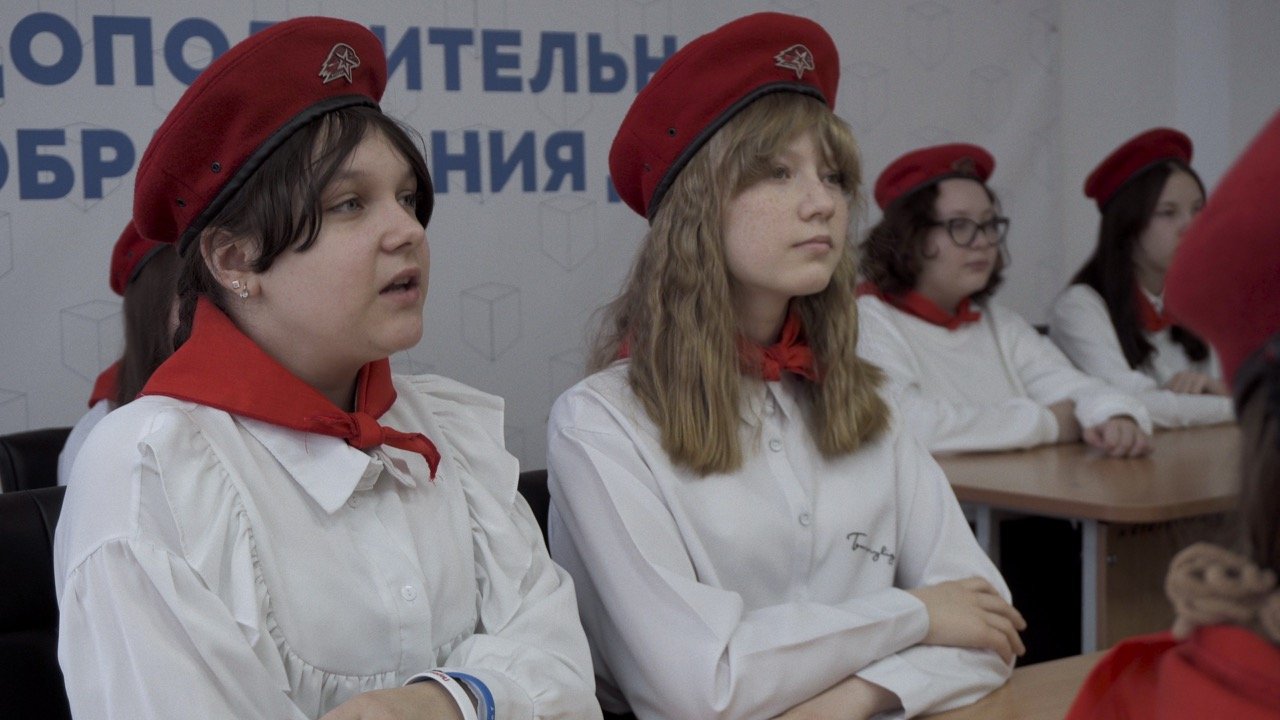
When the war broke out, Putin and his propagandist cronies believed they needed the unwavering support of the citizenry. And, to ensure that it was instilled at an early age, they began with the schools, indoctrinating youngsters into the official ideologies of the state. With lightning speed, the Russian government issued a series of dictates to all of the nation’s schools, requiring the students at these facilities to engage in a series of “educational programs” designed to instruct them (i.e., manipulate their beliefs) about the so-called virtues of Putin’s policies and practices, along with the glories of the Russian state, teachings that were not to be questioned. This instruction took the form of classroom sessions, the recitation of patriotic poetry, the singing of partisan anthems, daily regimental drills, and demonstrations of military weaponry in the form of field practices and student competitions. What’s more, to ensure compliance in these areas, schools were required to complete reams of paperwork and document their efforts with video recordings of these mandatory measures. And, as a consequence, the nature of Pasha’s job changed drastically overnight.
While the videographer usually kept his feelings and opinions to himself, this man of few words suddenly felt as though he had a lot to say. Even though he typically didn’t speak his mind, he found it difficult to keep quiet about the implementation of these troubling shifts in the school’s new mandated curriculum, the nature of which disturbingly harkened back to Soviet Era practices and, previously, the establishment of Nazi-style youth groups. But stepping up in vocal protest was not an option, one that could lead to charges of treason and daunting penalties if tried and convicted.
So what was Pasha to do? He initially resigned from his position, convinced he could no longer do the job that was being asked of him. However, he quickly changed course when he learned that there were interests in the West who wanted to know more about what he had been documenting in the school. Those interests encouraged him to continue chronicling what was happening in hopes that the footage could be smuggled out of Russia so the rest of the world could witness what has unfolding. Pasha agreed and withdrew his resignation, continuing to document what he had been required to record but now with a wholly different intent.
In many regards, Pasha was the ideal candidate to undertake this venture. He was already the school’s videographer, so it came naturally for authorities to assume that he was simply doing his job as he always had, even though the nature of his chronicling had changed to fall in line with government requirements. Then there was his mild-mannered demeanor, someone who came across as not wishing to rock the boat. Indeed, who would suspect anyone of subversiveness with such an easygoing, apparently compliant persona? Little did officials know, however, that he was essentially hiding in plain sight.
Over time, Pasha’s recording efforts expanded to include comparable developments in the public at large, the sentiments of which paralleled what was taking place at the school. Putin had encouraged such highly visible public demonstrations in an effort to further cement public support for the war effort. This was seen as crucial, given that securing the backing of draft age men was considered imperative to ensure that the military had fresh ranks of soldiers at its disposal for deployment on the battlefield. And, considering that these individuals were older and wiser than their more junior (and more impressionable) counterparts, they were seen as potentially being more difficult to sway in terms of their cooperation and support, conscription dictates notwithstanding. Pasha made sure to record these events, too, especially since some of those facing the draft were friends and former students from his school.
Through all of this, Pasha generally kept a low profile, despite a few modest attempts at expressing his defiance. However, as time passed, he began to suspect that he may have become the target of surveillance. And, at that point, he knew he had to begin preparing an exit strategy, one that would allow him to safely escape with his footage intact. It was a difficult decision, given that he would be leaving behind the only home he had ever known. It also meant leaving behind his mother, the school librarian, someone he adored even if their social and political views didn’t always align. But, when he undertook this endeavor, he knew there was a larger purpose behind it that he had to see through, and now it was time to make sure that he complied.
Such is how the story of student indoctrination at the Karabash grade school came into being, primarily thanks to the heroic efforts of one quietly courageous individual. In many ways, Pasha’s story almost seems to defy belief. Indeed, how could someone pull off an accomplishment like this under conditions where the odds were so heavily stacked against him? But the key word in this is “belief” – Pasha succeeded in achieving his goal because he believed he could, and that’s essential given the role that our beliefs play in bringing our existence into being, the philosophy that makes such outcomes possible. It’s unclear whether Pasha and his eventual collaborators had ever heard of this school of thought, but, based on the results they attained, it’s apparent that they knew how to employ its principles to accomplish what they set out to do. And we’re all better off for their efforts, showing us what had otherwise been hidden from view and desperately needed to be exposed.
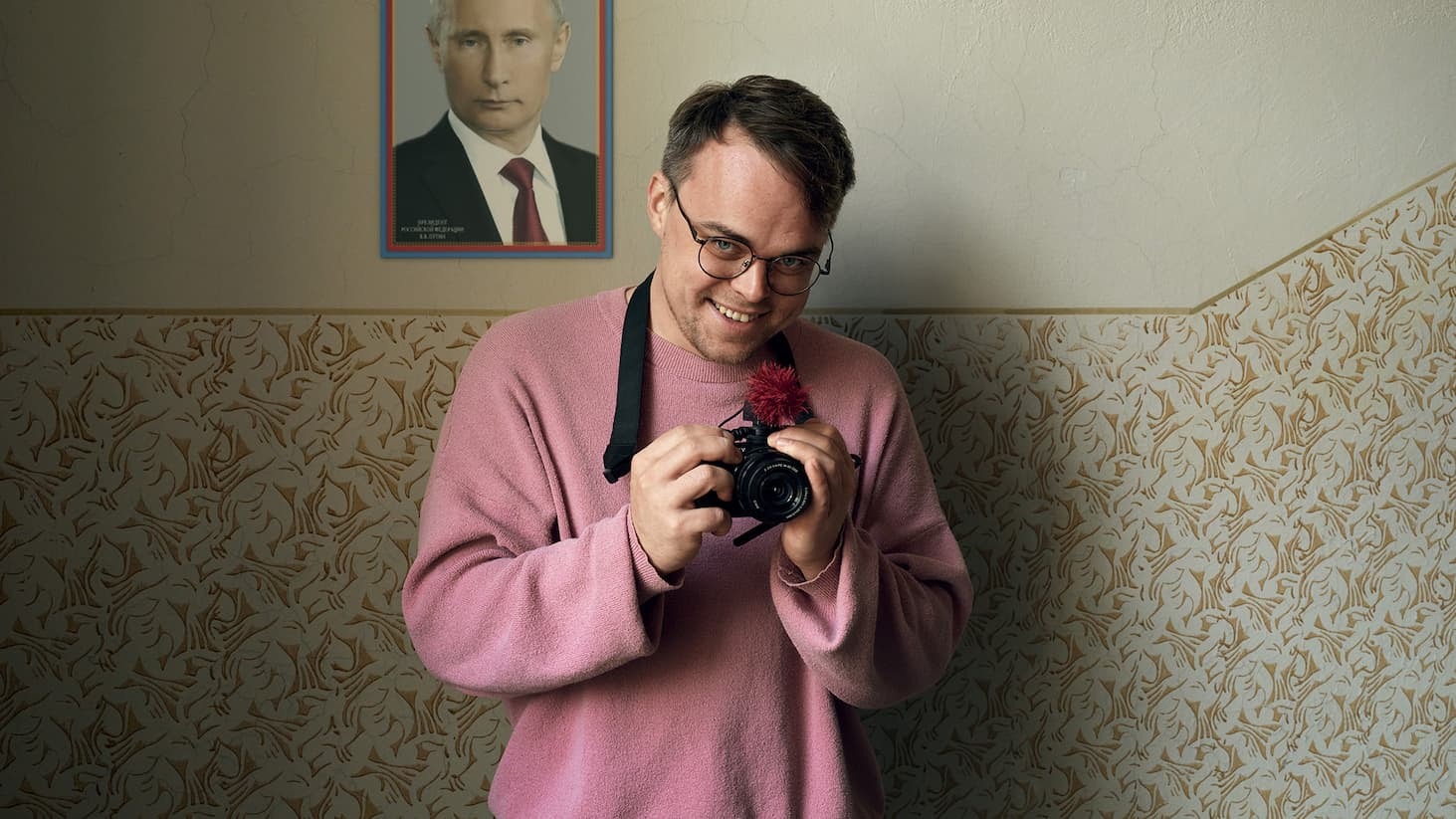
Recognizing the impact of beliefs in this scenario can’t be overemphasized. Fundamentally speaking, if Pasha didn’t believe he could accomplish what he set out to do, it never would have happened; the project would have been derailed before it ever reached completion. That’s true not only if he failed to acknowledge its basic viability, but it also could have been done in by conflicting beliefs that would have undermined its materialization, such as those rooted in doubt, fear or contradiction, the three most common killers of successful manifestation efforts. Fortunately, though, Pasha had faith in his convictions and was committed to following through on his mission. This film and the revelation of its content are proof of that.
Moreover, Pasha’s beliefs in making these developments known provided a powerful incentive in the realization of this result, especially since these notions were operating in direct opposition to a competing set of powerful beliefs – the propaganda behind Putin’s initiatives. In a sense, this situation could be seen as a clash between belief disciplines, one aimed at exposing the truth and one focused on deliberately obscuring it. And, when such opposing outlooks are pitted against one another, it’s not too difficult to determine which one will prevail in the end. Indeed, the notion of “the truth will out” would seem to have more veracity behind it than we may typically give it credit for.
In light of the results to emerge in this film, one could contend that the title is, in actuality, somewhat misleading. Considering what Pasha was able to accomplish, he was truly anything but a “Mr. Nobody,” despite a façade that might have conveyed that impression to his unsuspecting opponents. Without a doubt, Pasha Talankin’s resolve to see this task through is undoubtedly a genuine profile in courage, one that should be recognized and celebrated as such.
If one were a tyrannical despot, it would be “understandable” how critical winning over the hearts and minds of one’s subjects would be in securing their support for one’s cause, no matter how reckless or dubious it might be. And, under circumstances like that, propaganda can serve as a powerful tool in making one’s case. Nevertheless, no matter how potent such a weapon might be, it can still be undermined by a truth- and faith-based campaign designed to expose the deception and distortion. That’s clearly the case here; indeed, if someone as powerful as a head of state can be taken down by a grade school special event organizer, there’s something to be said for the potency of beliefs, especially those rooted in authenticity.
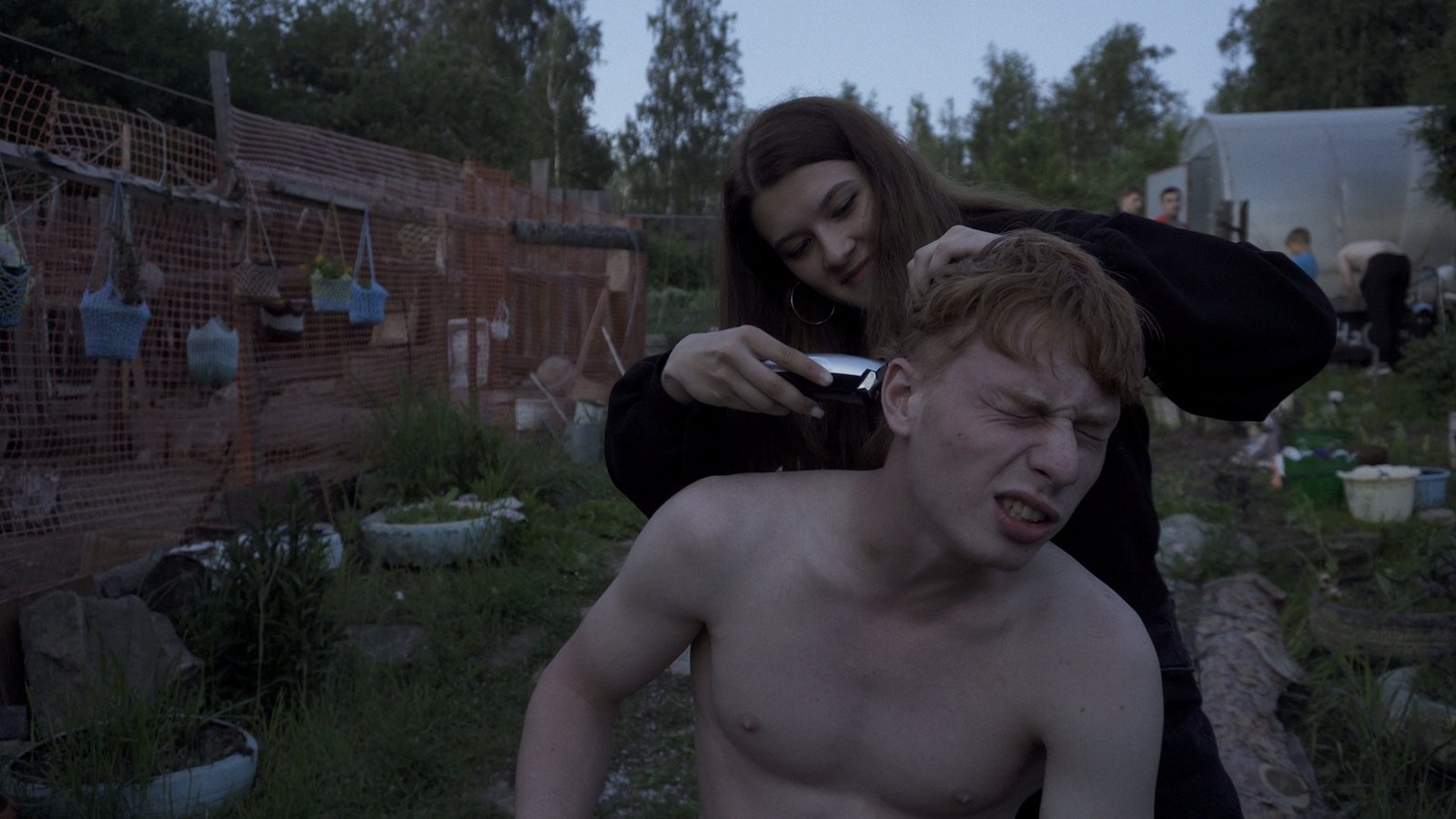
In this case, Mr. Putin didn’t count on the masterfully implemented subversive scheming of Pasha Talankin and the sincere intents underlying his plan. The damning footage Pasha compiled is truly powerful in and of itself, but its impact has been heightened through the collaborative enhancements incorporated by director David Borenstein. Much of the original footage has been successfully augmented with whimsical graphics and tongue-in-cheek audio voiceovers that show the ridiculousness of Putin’s propaganda campaign, especially now that it’s been brought into public view.
However, the laughs here have a troubling undercurrent running through them: To those in the West, these incidents probably appear patently preposterous, even though they’re ultimately anything but funny. What’s more, as effective as this release is in making Putin look innately foolish, there’s also a cautionary tale for those outside of Russia, one that shines a bright light on the fine line between proud patriotism and dangerously dogmatic nationalism. Viewers should thus bear this in mind in between the laughs, encouraging us all to remain vigilant to avoid falling into that trap. Taking pride in one’s country is one thing, but freely embracing carefully calculated partisan falsehoods is something else entirely, and the journey from one to the other is a lot shorter than most of us probably realize. But sometimes a seditiously satirical approach may be just what it takes to expose this truth. “Mr. Nobody Against Putin” is thus one of those films to watch, listen to, and, above all, learn from. This BAFTA Award winner and Oscar nominee for best documentary feature is available for streaming online.
In an age where discerning the truth has become increasingly difficult, many of us would undoubtedly like to hope that we reach a point where we don’t have to expend so much effort to figure out what’s genuine and what isn’t, especially when the stakes involved are dizzyingly high. Such conditions can be so frustrating that it may be tempting to roll over and give up, a move fraught with a host of potentially devastating consequences. But, thankfully, we have intrepid seekers out there who are willing to put themselves on the line for all of us. The courage required to do that can be formidable, but the payoff in the end can make a huge difference, again, for all of us. The inspiration afforded by their examples should embolden us all, enabling us to forge our own profiles in courage. And, to that end, we’d be wise to let individuals like Pasha Talankin show us the way.
A complete review is available by clicking here.
Copyright © 2025-2026, by Brent Marchant. All rights reserved.


Recent Comments